
Scotch Game
An aggressive opening where White quickly strikes in the center with 3.d4, leading to an open tactical battle.
Origins and fun facts about the Scotch Game
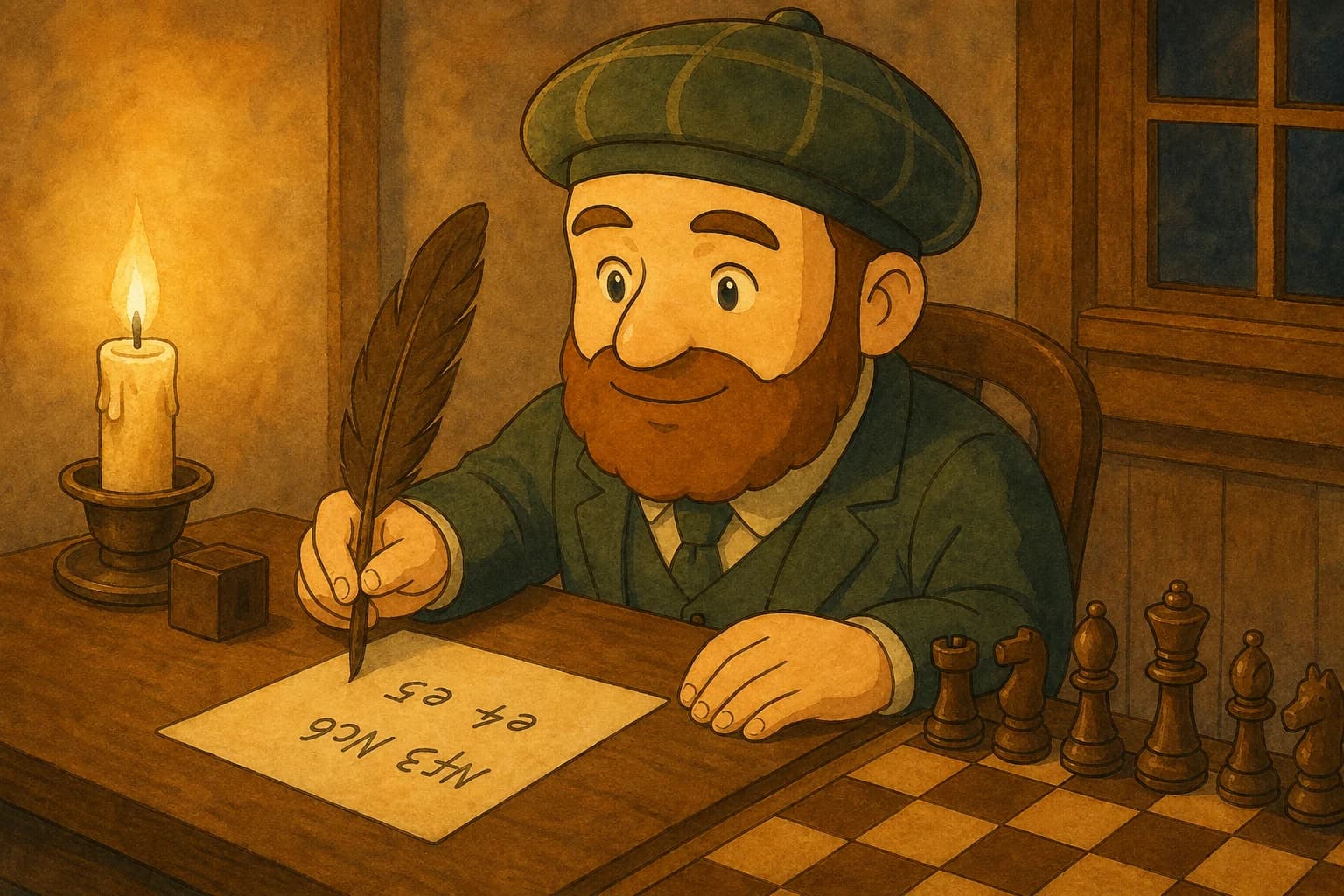
The Scotch Game owes its name to a famous correspondence match between the clubs of London and Edinburgh in the early 19th century. In 1824, communication was slow (mail delivered by horse!), yet that didn’t stop this dynamic opening from spreading.
Fun fact: Garry Kasparov used the Scotch as a surprise weapon in world championship matches. If it worked for Kasparov, it can work for you too.
Key Principles
- Immediate central claim: with 3.d4 White challenges the center and aims to open lines.
- Rapid development: open positions favor quick, efficient piece activity.
- Open files for heavy pieces: when the center opens, rooks and the queen quickly find active routes.
The idea is to gain central and active play early, forcing the opponent to be precise.
Why include it in your repertoire?
- Variety: it gets you out of the usual Ruy Lopez/Italian patterns.
- Surprise: many opponents are less prepared for a fully open center from move three.
- Tactics and strategy: a gold mine to train both tactical vision and central strategy.
Is it beginner‑friendly?
Yes, it suits beginners and intermediates alike.
Learning dynamism
The Scotch teaches you to handle open positions with speed and precision — essential skills for improvement.
Simplicity and immediate impact
By opening the center, you jump straight into the heart of open‑game themes.
Explore its flexibility
Once the basics are learned, you can branch into many lines: go sharp with Mieses or maneuver with Steinitz‑Berger.
Avoid repetition
It breaks the routine of over‑explored Ruy/Italian lines, keeping games fresh and instructive.
In short, the Scotch is like a first guitar for an aspiring rocker: it gets you playing fast while letting you express creativity. Ready to riff your opening solo? 🕺🎸
Learn the basics with a lesson
The Scotch Game
Understand the essential Scotch moves, their ideas and the positions you may reach.
Learn with Video
Practice with exercises
You will learn the main line then dive into practical training with an ELO module that adapts to your level and mixes theoretical moves with moves played at low ELO.